Personal Process: Creating a Script
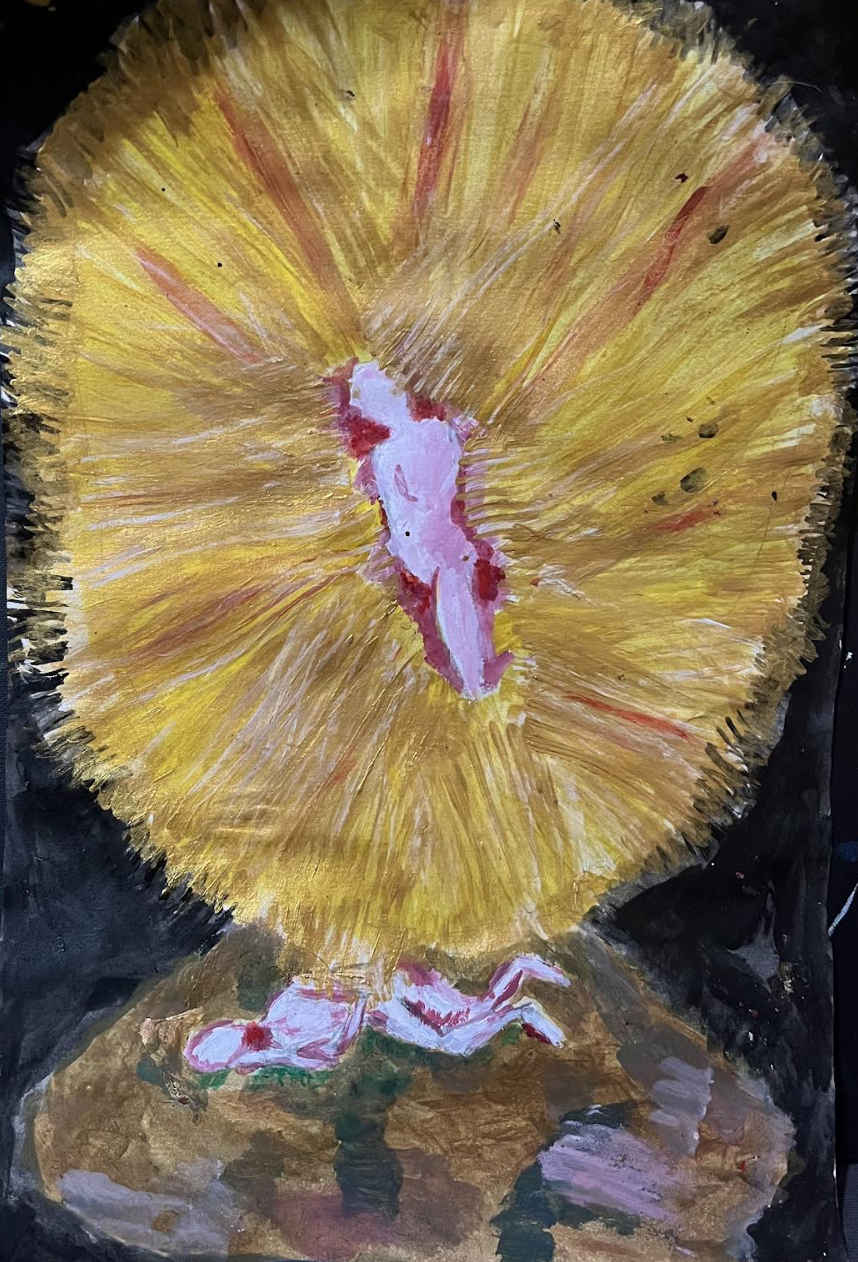
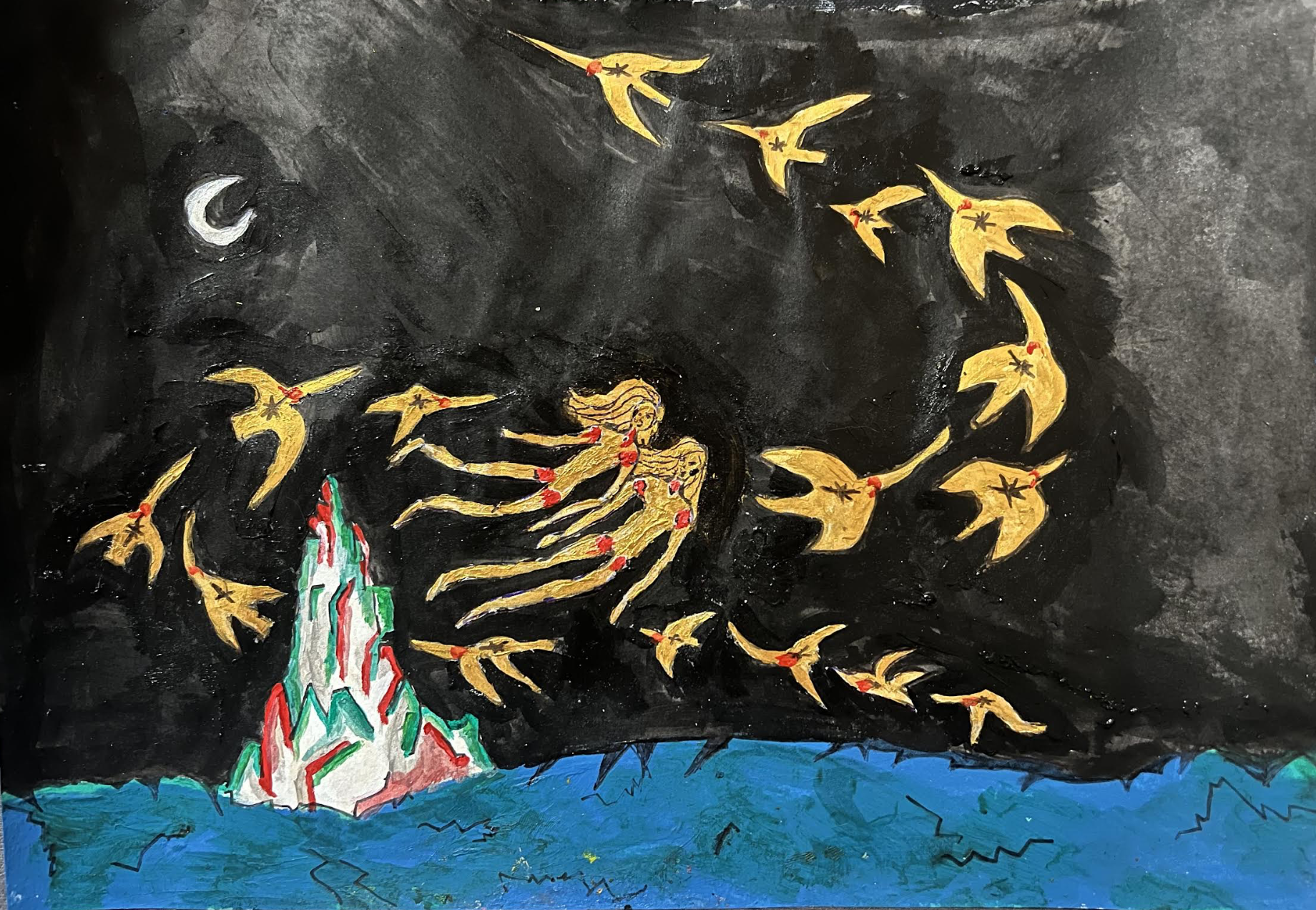
I began with Castellucci's constellation method. A week before I started, I read the Anne Carson translation of Euripide’s play. I didn’t want it to directly influence what I generated, but I wanted it to be present in my mind; perhaps it would bring certain things to the fore. For a few weeks, I spent an hour or so a day in busy Berlin parks and cafes drawing and writing. Unlike the solitude of the late nights in my apartment, I did not only engage with my own world but took in what was around me. I wrote down sounds of birds chirping, sirens, people laughing, and used relationships and conversations I observed to inspire my drawings. It was an oscillation between taking in what I saw and then going back inside myself to see what was there.
Observing the world of strangers and documenting my creative responses made me want to continue this practice on a more intimate level. I spent many hours reading reddit threads where people recounted their dreams and nightmares. I also texted friends and acquaintances to send me their most memorable and impactful dreams. The ones that interested me most, that I felt viscerally when I read, I would draw. As I drew new details would emerge from my own imagination and form the beginnings of scenes. One person recounted their dream of a bright red room with an infinite spool of red thread being pulled by an unseen outside force. This action was accompanied by the sound of an eternal, high-pitched whistle. As I drew the thread, I imagined the room and the sound. As the image continued, my mind added a leaking crack in the wall, slowly filling the room with blood.
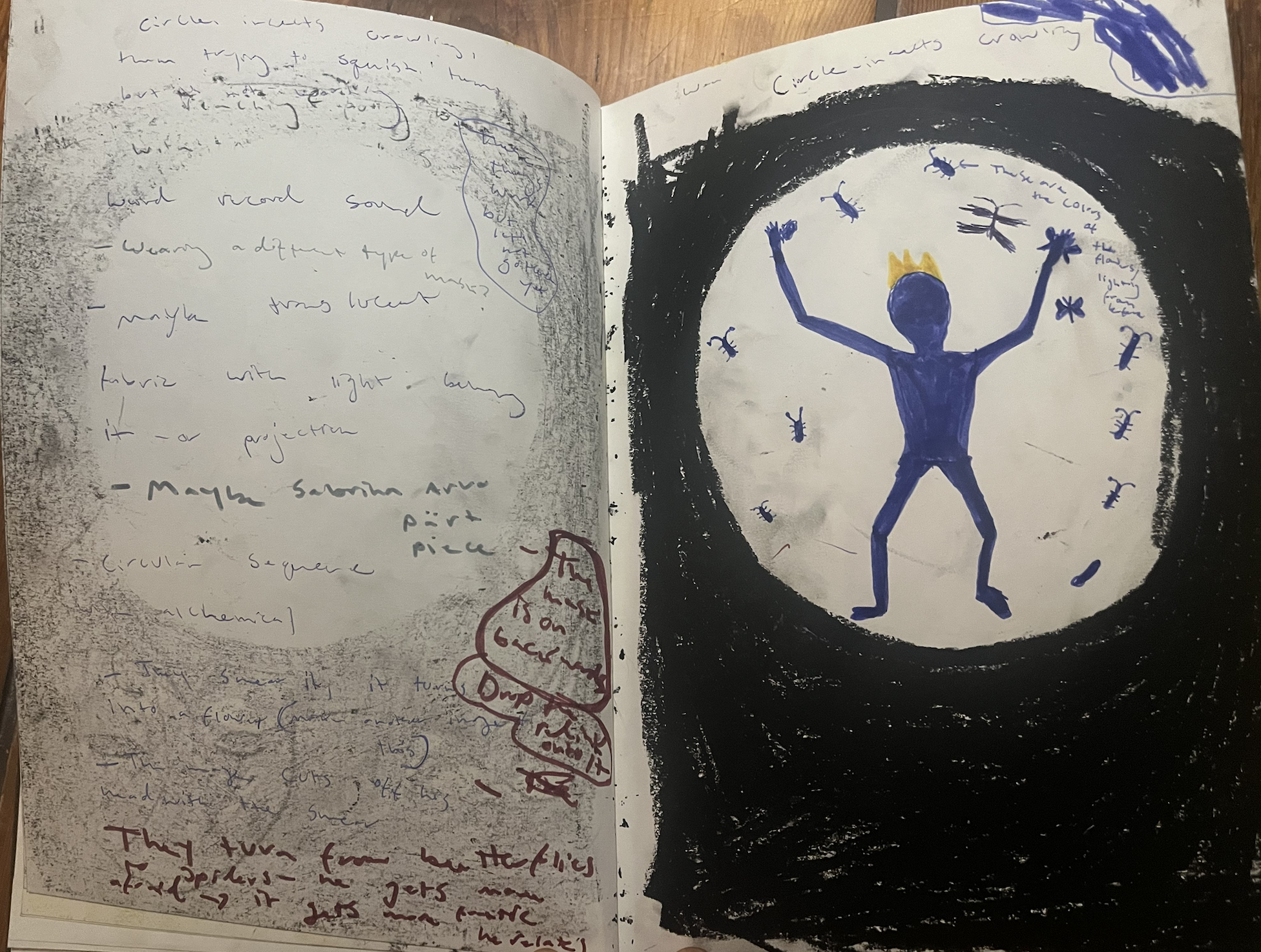
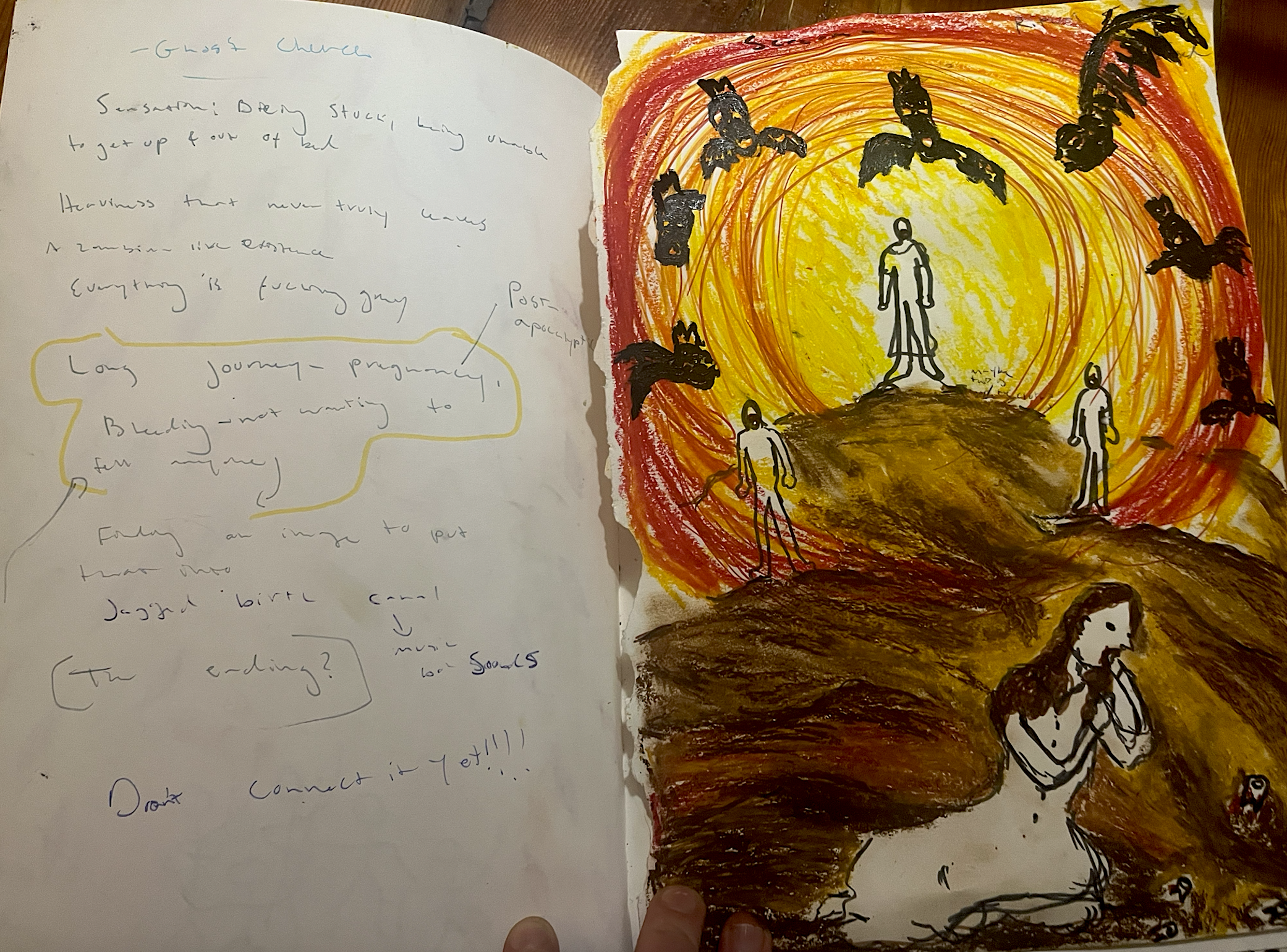
The constellations and connection to Bacchae’s fabula naturally started to emerge. I did not want to start connecting them too quickly, but it began automatically. I would go back in my notebook, read the ‘spool of thread’ scene, and think of Pentheus preparing to spy on the maenads, not knowing his life was almost up. I would re-read my notes periodically after a few days of drawing, and an order and transitions between the images began to emerge. The ones that intuitively felt disconnected I decided not to use; maybe they could work for a different project. The one part of The Bacchae I felt never connected to my notebook scenes was Pentheus’s demise; the sparagmos. This may be because sparagmos is such a powerful, symbolic image in its own rite. Through this work I started to build a pseudo-script, each scene had an image on the right notebook page and movement and sound ideas on the left.
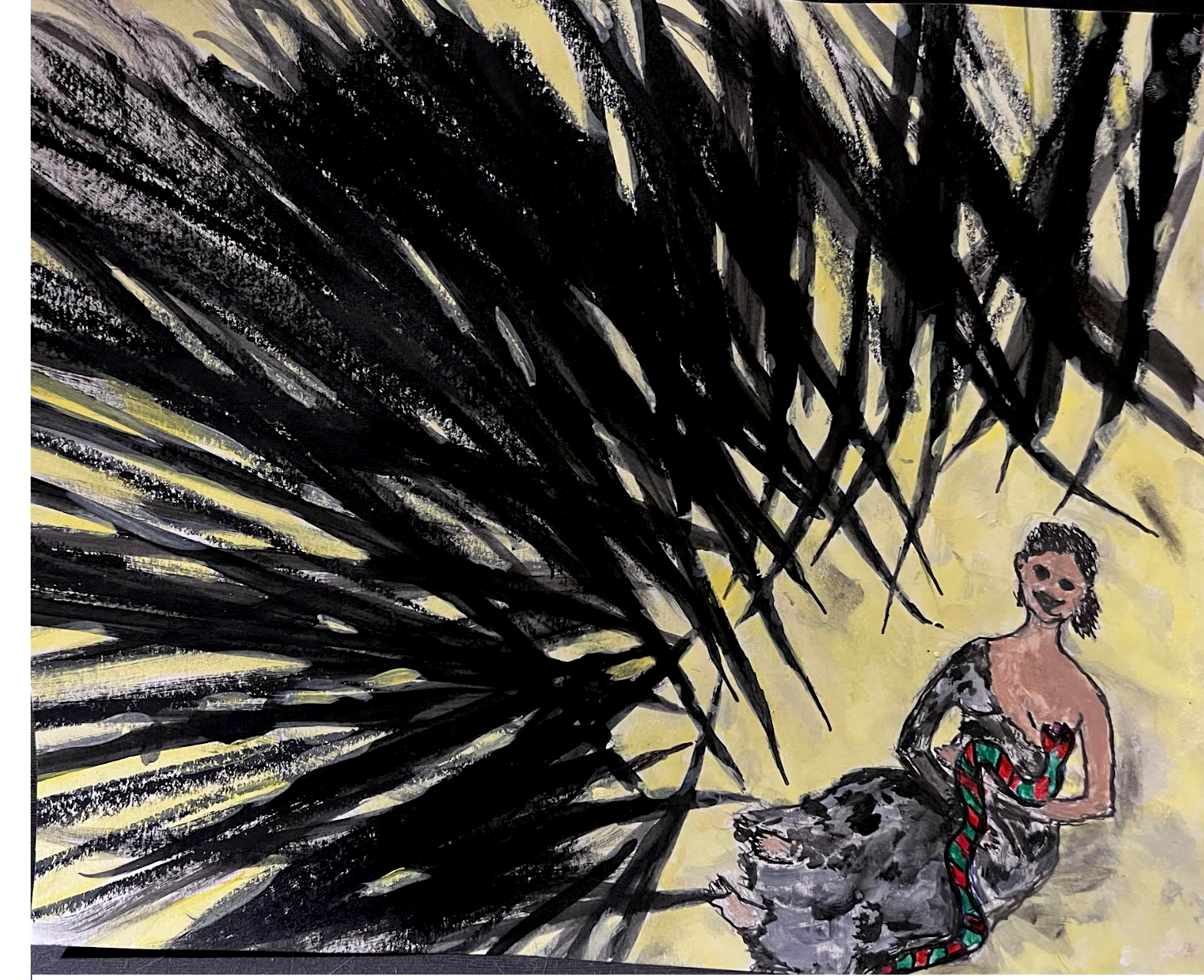
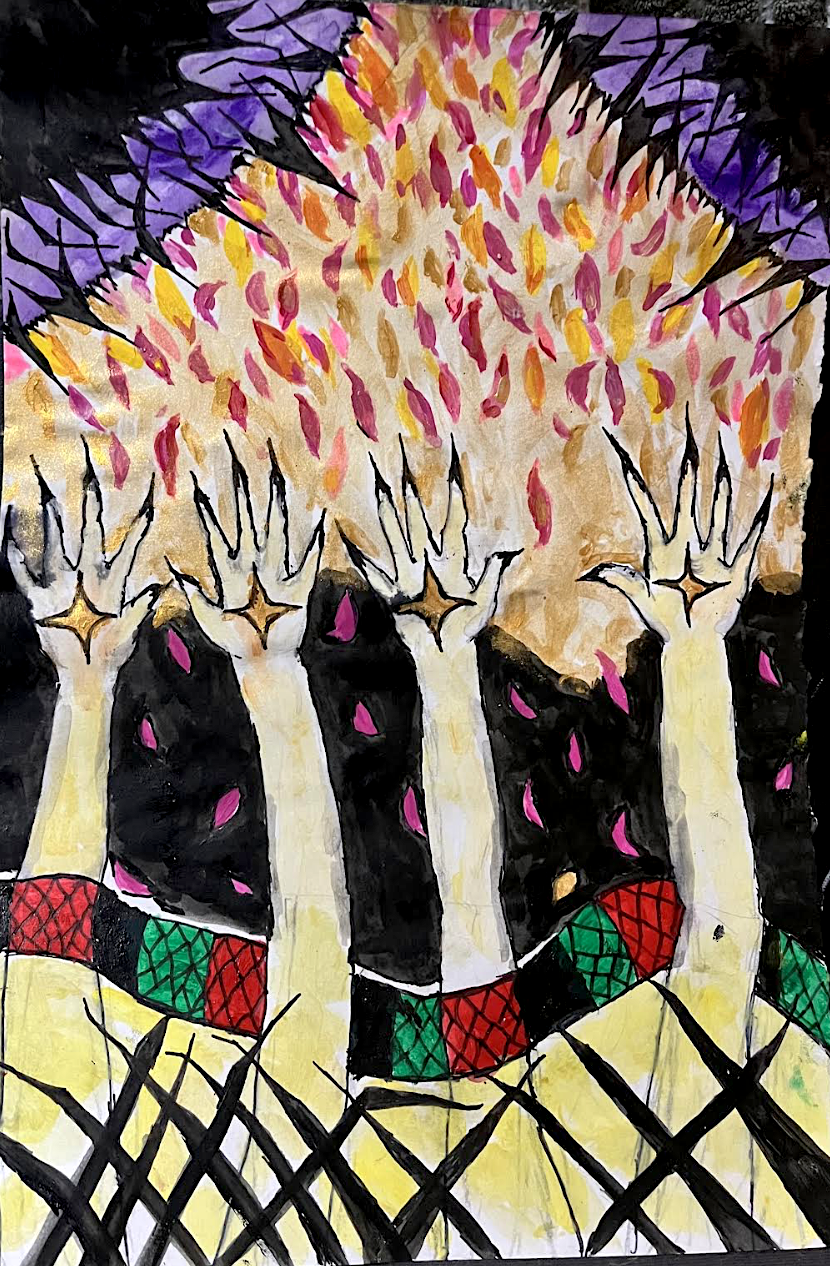
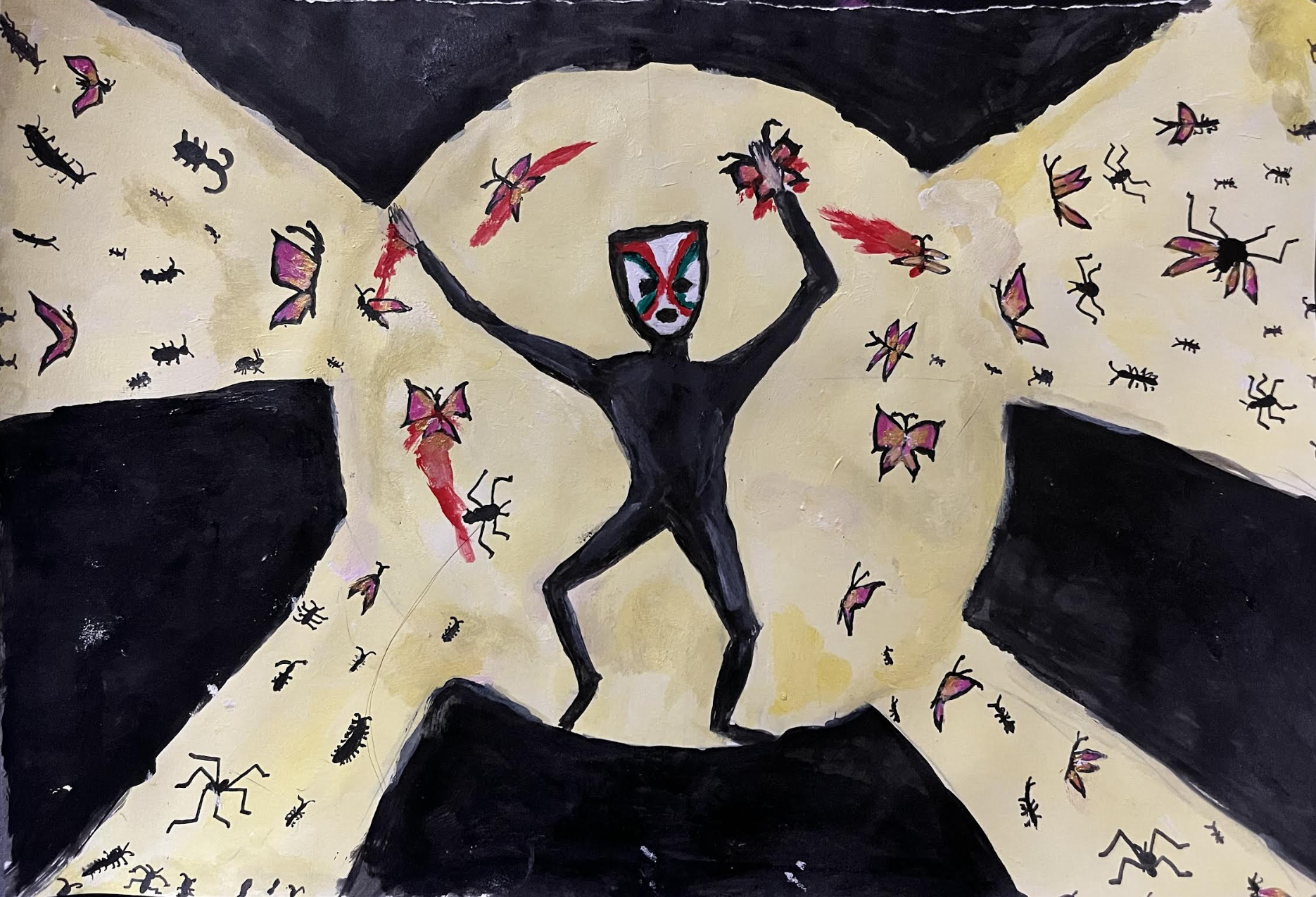
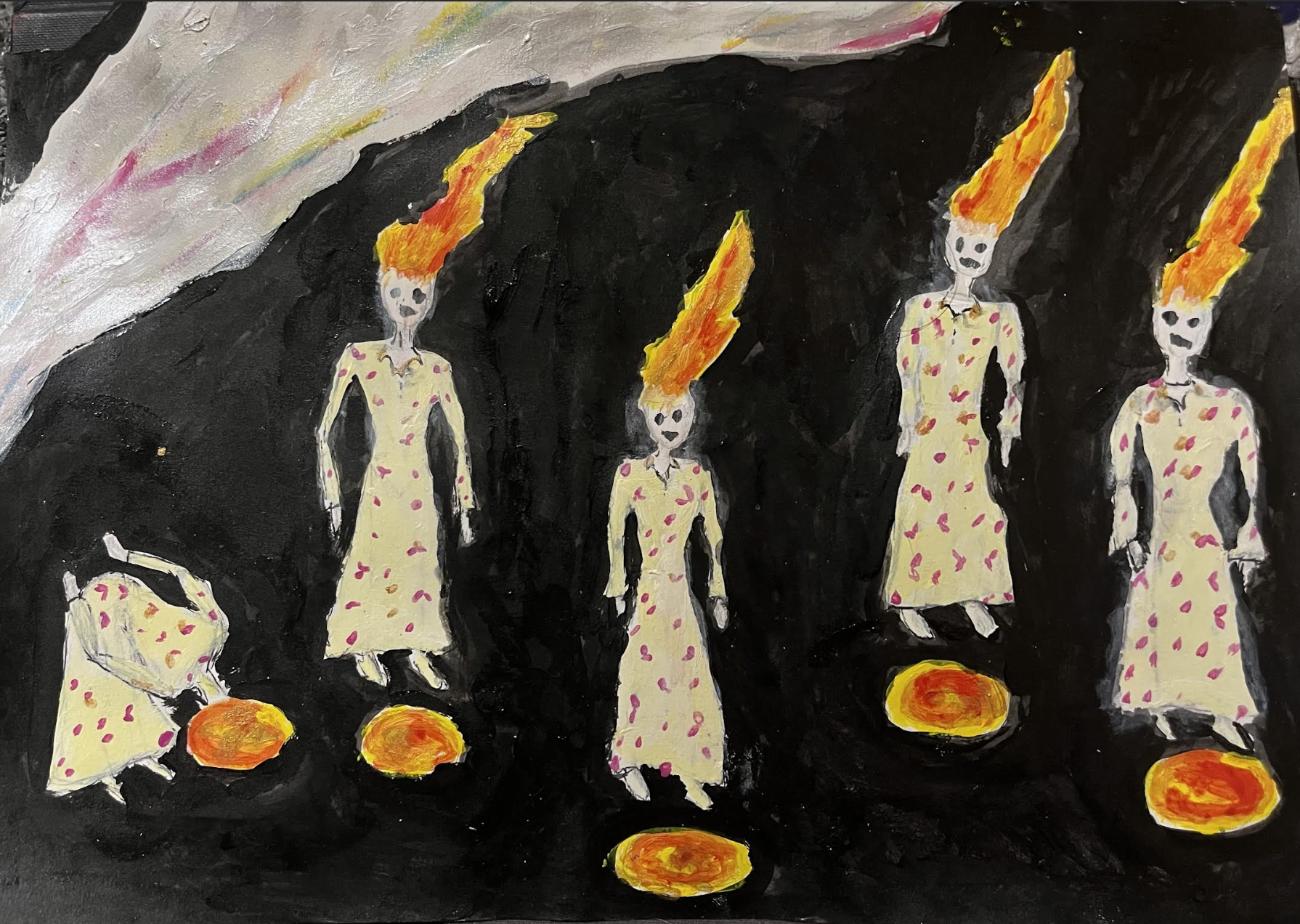
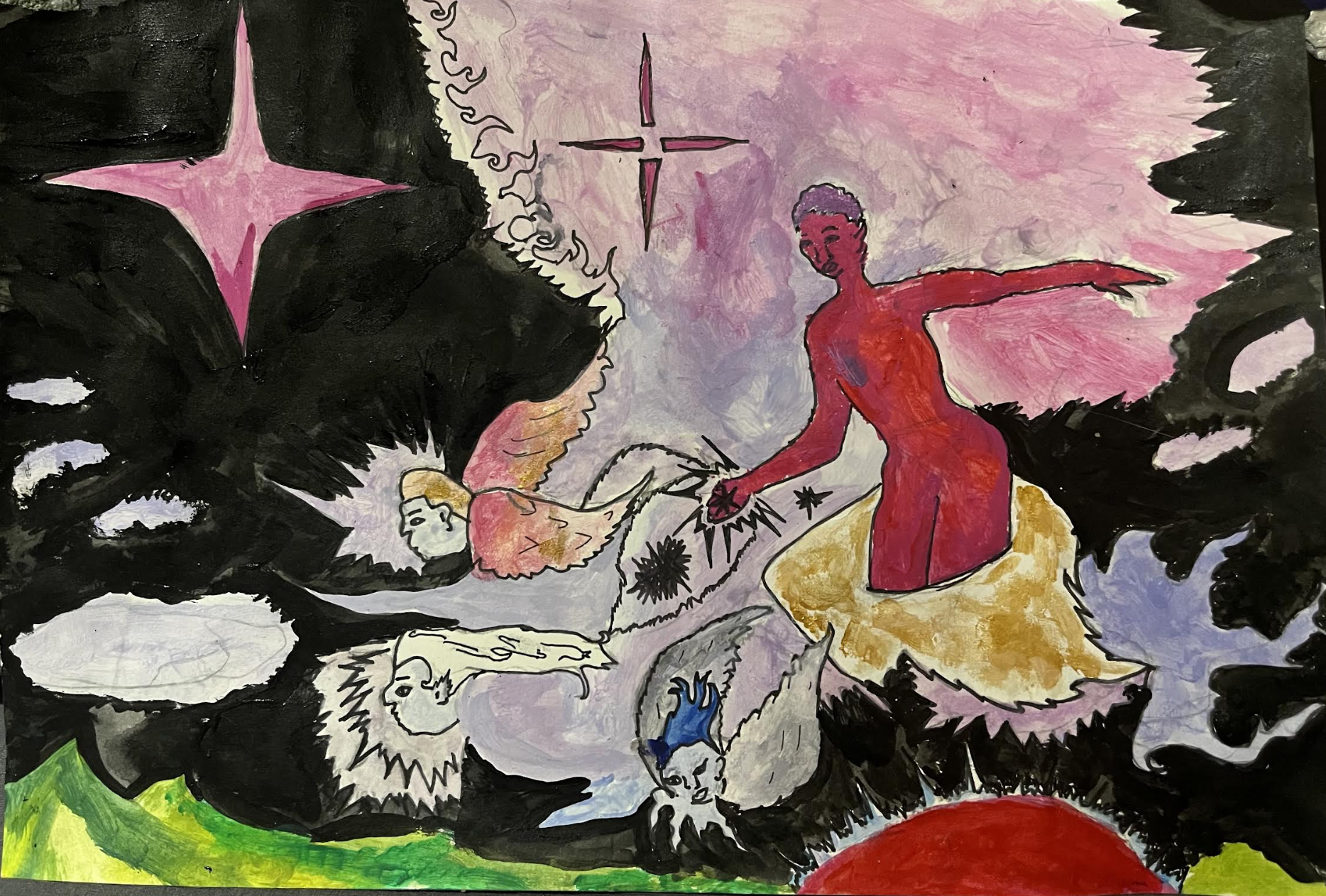
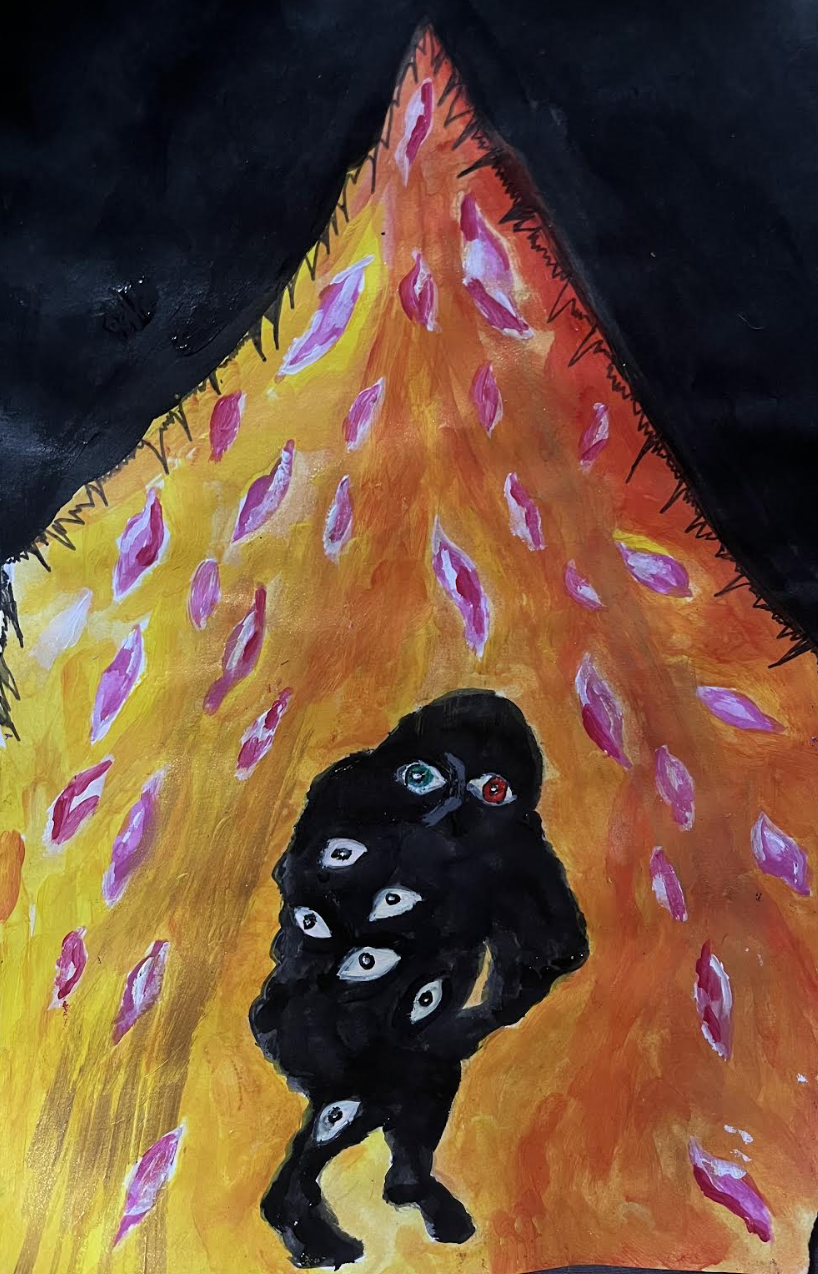
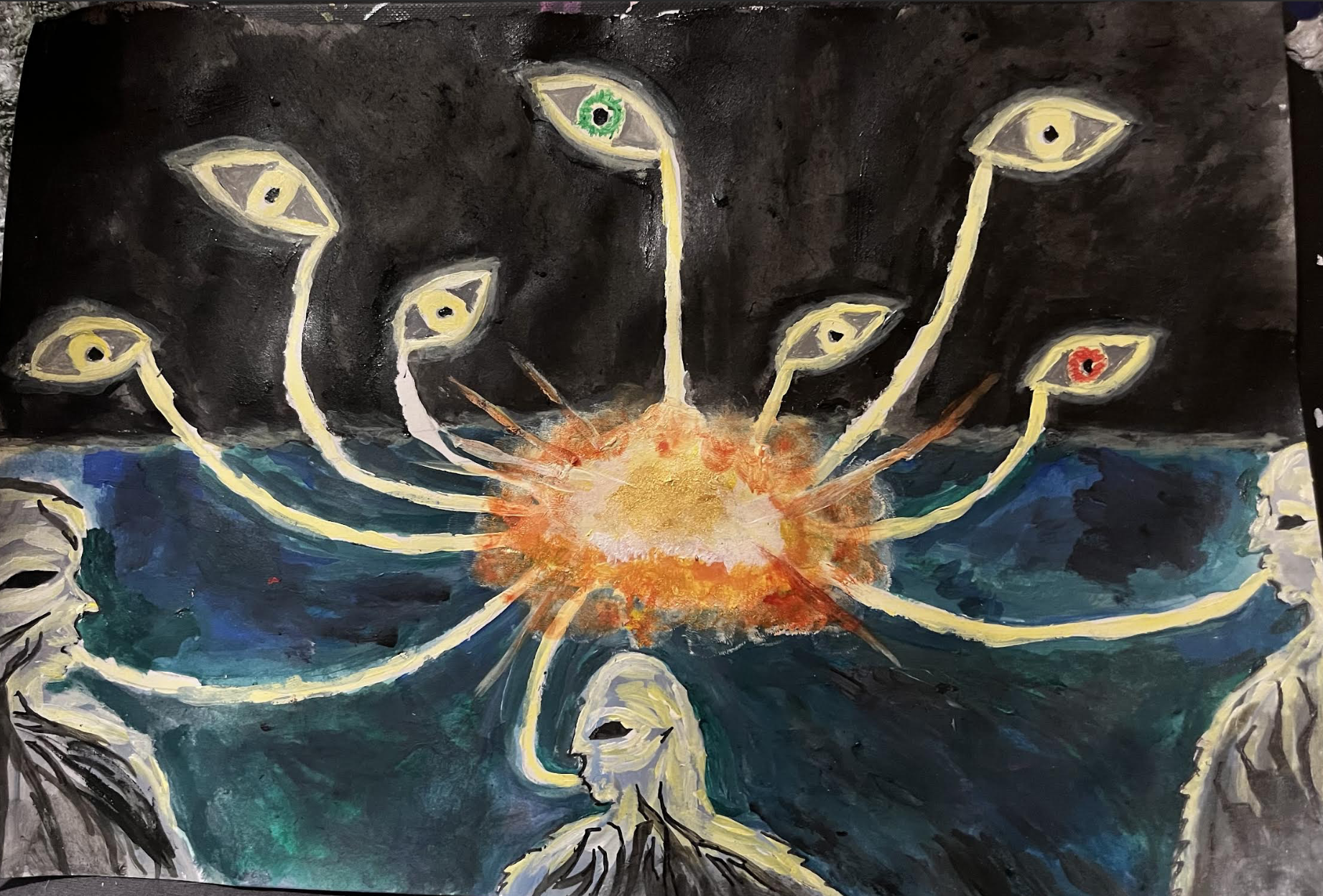
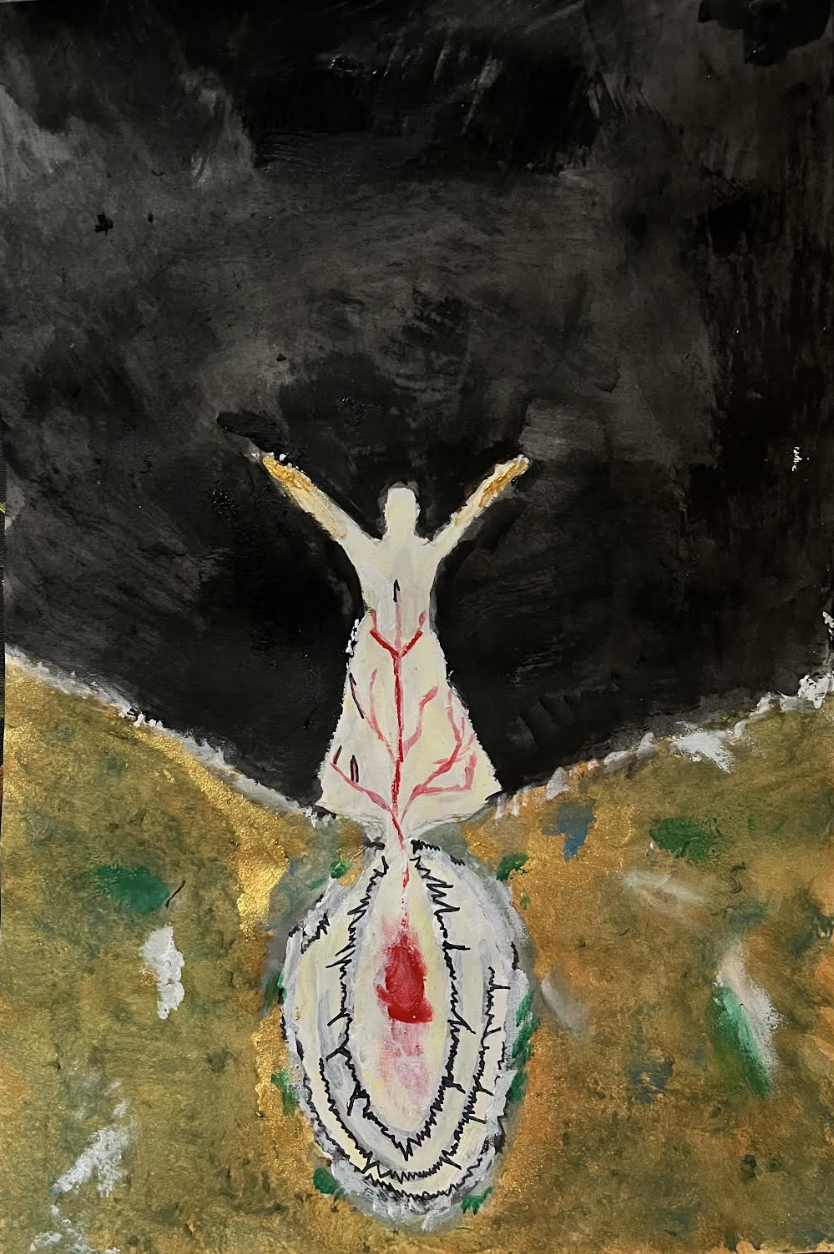
Examples of initial constellating:
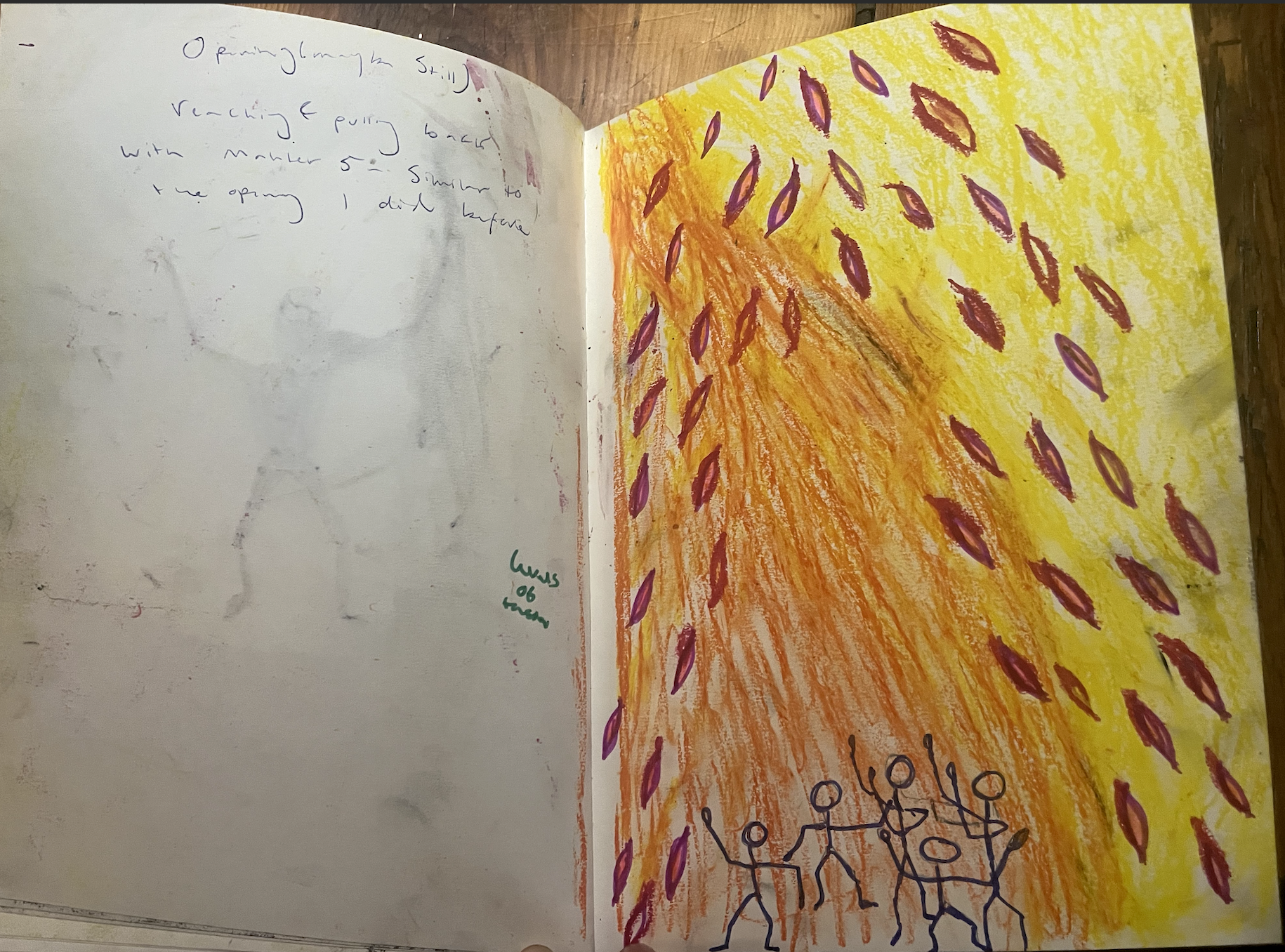
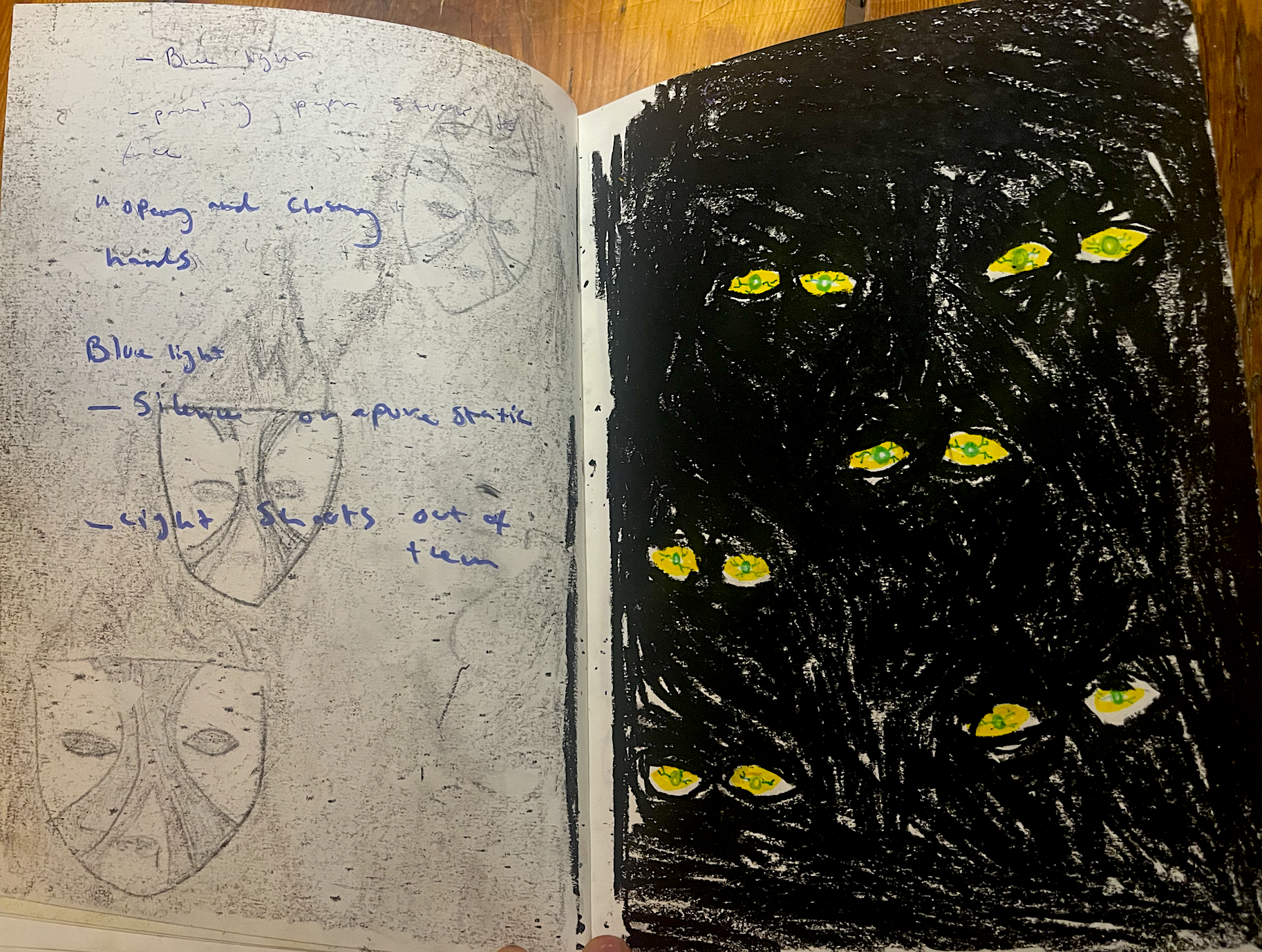
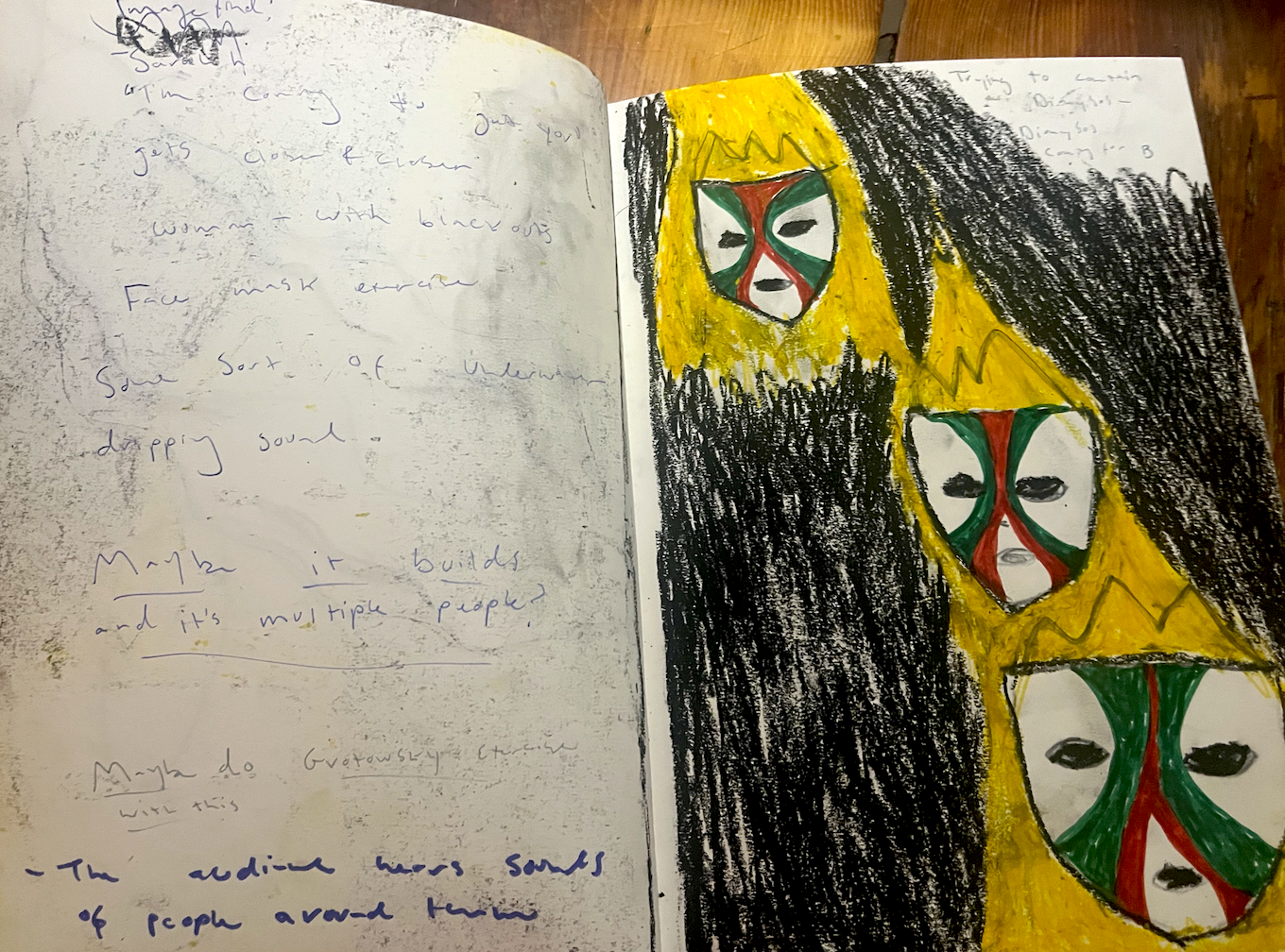
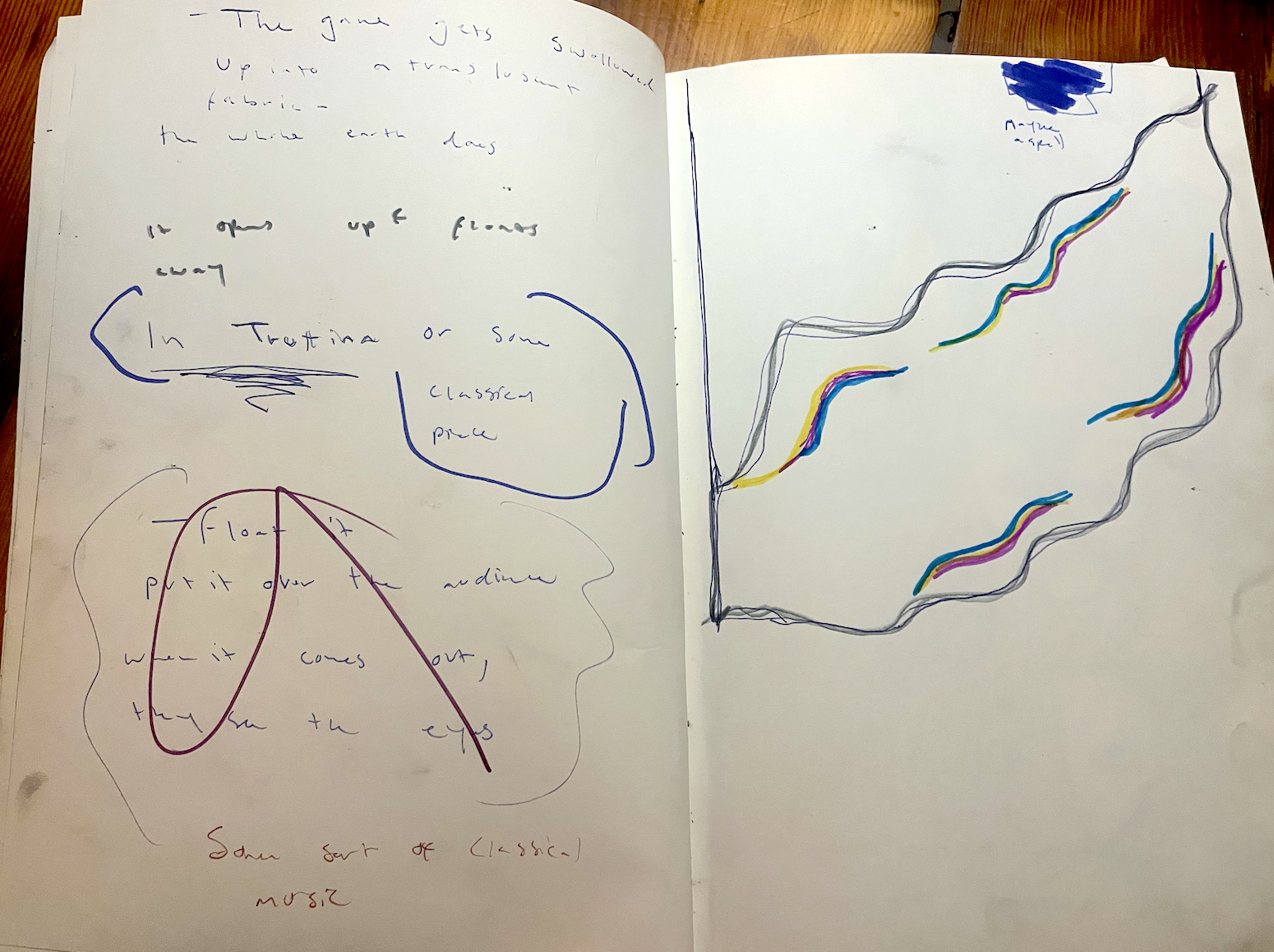
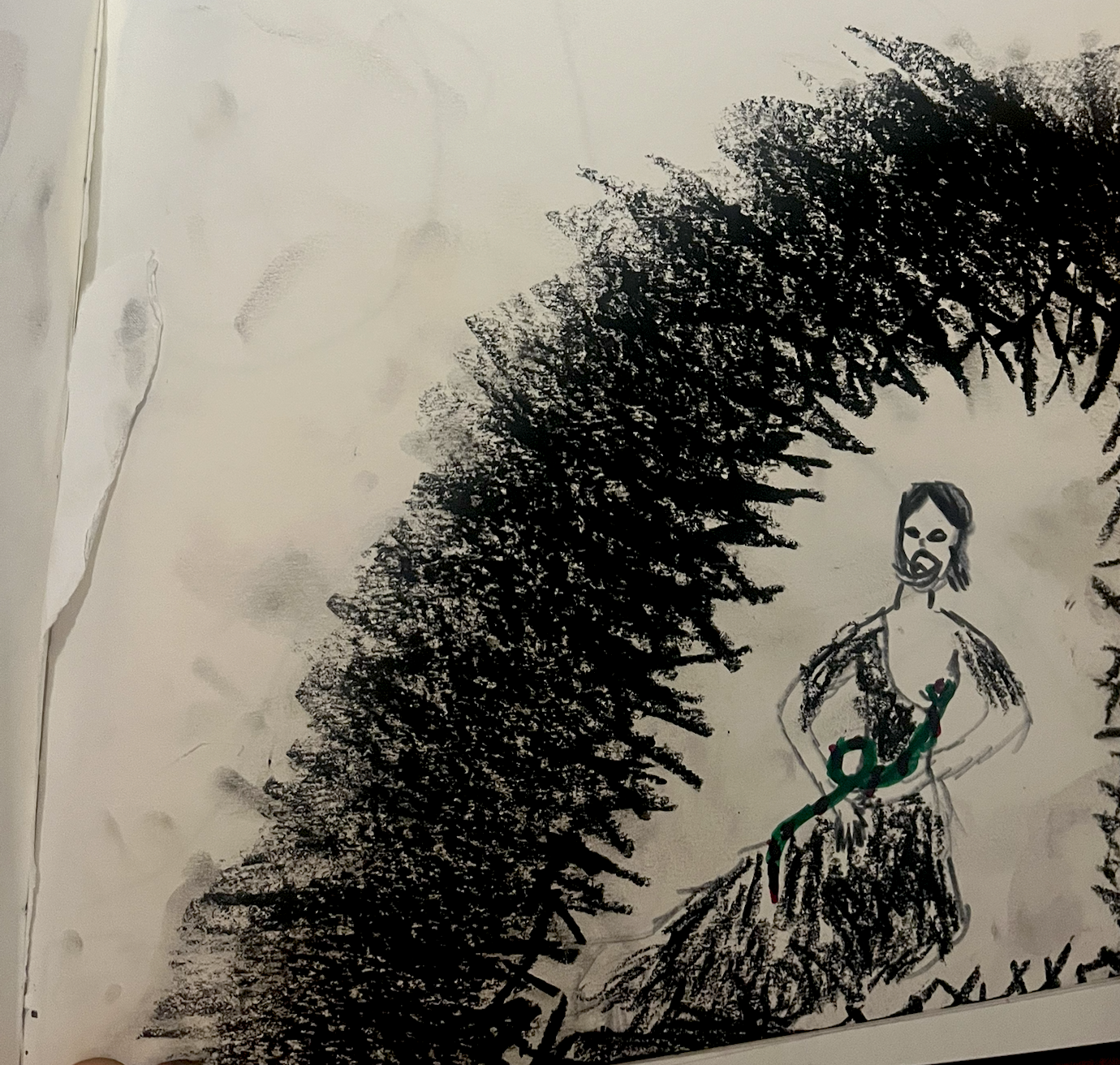
At Arthaus we would often talk about The Poetic—my understanding of this concept is the line between literalness and opacity. This is where meaning emerges. I felt what I had was too opaque, so I decided to re-examined Euripide’s text. I had to find a way to effectively communicate my emerging idea to collaborators, and that required more specificity. To do this, I went back to a form of text analysis I used when directing classical plays: Louis E. Catron’s The Director’s Vision: Play Direction from Analysis to Production (1989) (Cite?). Through this analysis, I was able to clarify the fabula; its architecture, actions, underlying conflict, most important moments, and characters and scenes that needed some form of representation. After all this I had six scenes and a ‘prelude.’
My constellation practice was not a perfect system. Now that I was working on a more practical and intellectual level, at least two of these essential Bacchae moments had no discernable connection to my notebook. I went back to my reddit and friend dreams, but every connection I found was either incoherent or overly-literal. My solution for this was to seek out visual artists who worked with a recognizable process to my own. The most inspiring of these was painter Naudline Pierre. I connected her piece I, A Terror Loosed Upon Your Heels (2022) to the moment Dionysos escapes Pentheus’s imprisonment and the maenads break free of his attempts to control them.
The final script I sent to my performers was a mix of dramaturgical information I thought was relevant for them to know, along with the product of my constellation work I edited down in an effort to make them succinct and specific enough to provoke their imaginations